Upper respiratory symptoms are one of the most common reasons pets are brought into a veterinary clinic—especially during high pollen seasons in North Georgia. Sneezing, nasal discharge, and congestion often raise an important question: Is this an upper respiratory infection (URI), or is it allergies?
Understanding the difference is essential, because these conditions require very different treatments.
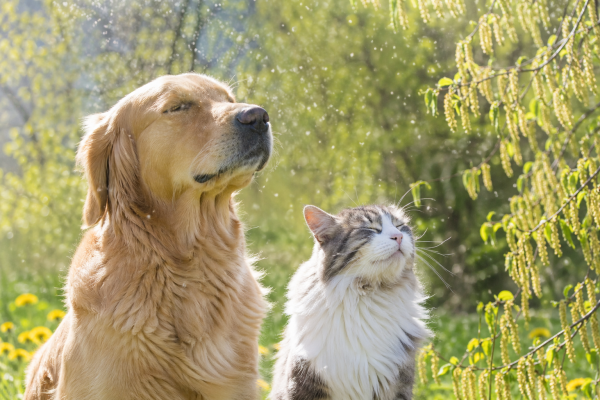
Upper Respiratory Infection vs. Allergies: What’s the Difference?
An upper respiratory infection (URI) affects the nasal passages, sinuses, and throat. These infections are typically caused by viruses or bacteria and can spread between animals, depending on the species.
Allergies, by contrast, are not infections. They are caused by the immune system reacting to environmental triggers such as pollen, dust, or mold.
Why Symptoms Increase During Allergy Season
Respiratory symptoms often increase during spring and fall, but pollen does not directly cause infections. Instead, allergens create conditions that make respiratory issues more noticeable or more severe.
Allergens can:
- Irritate the nasal passages and sinuses
- Increase mucus production
- Cause inflammation in the airways
- Reduce the body’s ability to clear bacteria and viruses
As a result, pets may experience:
- Worsening of existing respiratory infections
- Flare-ups of chronic viral infections (especially in cats)
- Increased risk of secondary bacterial infections
Do Allergies Make URIs Worse?
Yes, but indirectly.
When the airways are inflamed from allergens, even a mild infection can appear more severe. Pets may show increased discharge, congestion, and discomfort during high pollen periods, even if the underlying issue hasn’t significantly changed.
How to Tell the Difference: Infection vs. Allergies
Signs More Consistent with Allergies
- Clear, watery nasal discharge
- Frequent sneezing without fever
- Normal appetite and energy levels
- Itchy skin (especially in dogs)
- Symptoms that appear seasonally
Signs More Consistent with Upper Respiratory Infection
- Thick yellow or green nasal discharge
- Eye discharge or crusting
- Fever or lethargy
- Loss of appetite
- Persistent coughing or labored breathing
Species-Specific Respiratory Signs
Dogs
Dogs commonly develop seasonal allergies, especially in areas like Johns Creek where pollen levels are high. Symptoms often include sneezing, reverse sneezing, and nasal discharge.
True respiratory infections, such as kennel cough, typically present with a persistent, hacking cough and may involve multiple infectious agents.
Cats
Cats are highly prone to viral upper respiratory infections, particularly feline herpesvirus and calicivirus. According to the Cornell Feline Health Center, many cats become lifelong carriers.
Allergy season can trigger flare-ups in these cats, leading to increased sneezing, congestion, and eye discharge.
Rabbits
Rabbits frequently suffer from bacterial respiratory disease known as “snuffles.” Environmental irritants like dust and hay particles can worsen symptoms and slow recovery.
Birds
Birds are extremely sensitive to airborne irritants. Exposure to pollen, dust, or aerosols can quickly worsen respiratory signs, even if an infection is already present.
Snakes and Lizards
Reptiles are not affected by pollen in the same way mammals are. However, seasonal changes in temperature and humidity can weaken their immune systems and contribute to respiratory infections.
Why Proper Diagnosis Matters
Misidentifying allergies as an infection—or missing an infection entirely—can delay effective treatment.
- Antibiotics will not treat allergies
- Untreated infections can progress to more serious conditions like pneumonia
- Chronic inflammation can make infections harder to resolve
A proper veterinary exam ensures accurate diagnosis and targeted treatment.
When to Schedule a Veterinary Visit
Contact your veterinarian if your pet shows:
- Thick or discolored nasal discharge
- Difficulty breathing
- Loss of appetite
- Persistent coughing or sneezing
- Eye discharge or swelling
Veterinary Care in Johns Creek
At Windward Animal Hospital, respiratory conditions are carefully evaluated to determine whether symptoms are caused by infection, allergies, or a combination of both. Early diagnosis leads to more effective treatment and faster recovery.
SCHEDULE YOUR VISIT TODAY!
📞 (770) 569-7298 | 🕒 Book Online