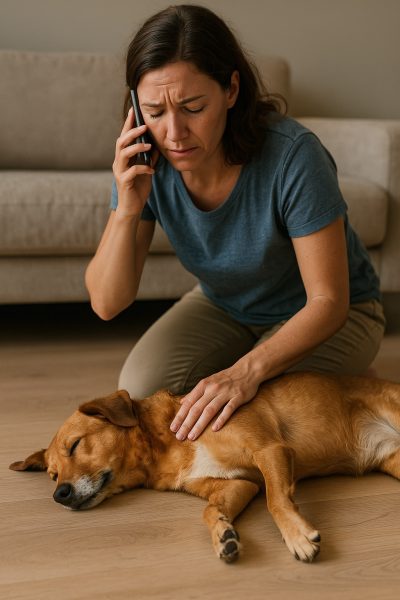
When a dog collapses, a cat suddenly struggles to breathe, gets hit by a car or you find a chewed pill bottle on the floor, it is hard to think clearly. The time to decide what you will do in a pet emergency is BEFORE anything goes wrong. A simple plan now means you are not scrambling for a phone number or wondering where to go while your pet needs help.
WHY PLANNING MATTERS
In a true emergency, your pet’s outcome often depends on how fast they reach appropriate care. Breathing problems, shock, urinary blockages, major trauma, poisoning, and bloat can all become life-threatening in a short time. Many owners lose precious minutes searching online, driving to a closed clinic, or waiting for a call back while their pet is getting worse.
Human healthcare is a good comparison. If you suddenly felt crushing chest pain and thought you might be having a heart attack, you would not call your primary care doctor and wait. You would go straight to the Emergency Room. Even your cardiologist would send you to the ER, because that is where the staff, oxygen, monitoring, and emergency equipment are ready right now.
Pet care works the same way. Your primary care veterinary clinic is your pet’s medical home for wellness exams, vaccines, follow-ups, and most “not feeling right” visits. A 24-hour emergency hospital is the ER equivalent for serious, time-sensitive problems that cannot wait. A good emergency plan understands both roles and tells you exactly which one to use when it really matters.
HOW WINDWARD ANIMAL HOSPITAL FITS INTO YOUR PLAN
At Windward Animal Hospital in Johns Creek, our primary Veterinarian, Dr. Colby, is no stranger to emergency situations — both in common domestic pets and in exotic species. However, he splits his time between seeing patients at the clinic for routine appointments, emergency visits, and surgeries, and responding to calls in the field at Zoos and Farms. This varied clinical hours setup is very common in veterinary medicine, a veterinarian is not guaranteed to be in the building or immediately available at every hour the way a 24/7 emergency center is.
When you are dealing with a true emergency, the priority is guaranteed, immediate attention. If your vet is on the road, in surgery, or the clinic is closed, there may be no one available to rapidly stabilize your pet. Your plan should be built so you are not losing time calling around or driving to a closed building.
IDENTIFYING YOUR 24-HOUR EMERGENCY VET HOSPITAL
This is the single most important part of your plan: “Always, always know the contact information for a 24-hour veterinary emergency hospital closest to you.”
As soon as you suspect a true emergency – your first moves should be simple: If it is outside your regular Vet’s clinical hours or too urgent to risk:
- Call your chosen 24-hour emergency hospital and clearly say, “I think this is an emergency.”
- Follow their instructions and head directly there unless they specifically tell you otherwise.
- You can always update your primary clinic later. In those first minutes, getting your pet to a place where help is guaranteed is the top priority.
THE LOCAL STABILIZATION EXCEPTION (FOR NEARBY WINDWARD CLIENTS)
For some clients who live very close to Windward Animal Hospital, there is a exception since Windward Animal Hospital deals with so many emergency situations – if you know Dr Colby’s normal on-site clinical hours then by all means call or come straight in. IF YOU LIVE NEARBY. Start the conversation with “This is an emergency situation do I come to the clinic or a 24 Hour Emergency Clinic?” If Dr Colby is not in the office and our medical team is able to help stabilize, then direct you to the 24-hour emergency hospital for full care. This exception only makes sense when stopping at Windward is truly faster than driving directly to the emergency hospital. At your next regular visit, discuss it with Dr. Colby or a team member whether a local stabilization plan is realistic based on where you live. For most serious emergencies, your first destination should still be your 24-hour emergency hospital.
YOUR 3-STEP PET EMERGENCY PLAN
You can build a solid emergency plan in three simple steps:
STEP 1: CHOOSE YOUR 24-HOUR LIFELINE
Pick the 24-hour emergency veterinary hospital closest to your home (and, if different, to your workplace). Save their name, address, and phone number in your phone under a clear label such as “EMERGENCY VET” This is where you go when it looks like a real emergency.
STEP 2: KNOW THEIR PROTOCOL
Look up how that hospital wants you to arrive. Do they prefer you call before you come? Do they have any special check-in or parking instructions? Save those notes with their contact so you are not guessing under stress.
STEP 3: USE THE PLAN WHEN IT COUNTS
If a crisis hits, follow the plan.
PET EMERGENCY ESSENTIALS: KIT, FIRST AID, AND PRACTICE
A few practical steps make your plan much stronger without a lot of work.
Keep a small pet emergency kit in one place at home. It does not need to be complicated. Include a leash and well-fitted collar or harness, a secure carrier for cats and small dogs, a few days’ worth of your pet’s regular food, a small water bottle and collapsible bowls, any daily medications, and a written list of those medications. Phone photos or copies of vaccination records and recent lab work can be very helpful for emergency staff.
Learn a few basics of pet first aid so you can move safely and confidently on the way to the hospital: how to lift or move an injured pet without being bitten, how to spot trouble breathing (especially open-mouth breathing in cats or blue/pale gums), and how to apply gentle pressure to slow bleeding with clean gauze or a cloth. Just as important is knowing what not to do – for example, do not give human painkillers or induce vomiting unless a veterinarian or poison-control professional tells you to. First aid buys time; it does not replace emergency care.
On a calm day, run one quick “fire drill” with your family. Practice getting your pet into the car, drive once to your chosen emergency hospital so you know where to go, and decide who is responsible for grabbing the kit, making the call, and keeping the pet calm. That one practice run can prevent confusion when you are scared and time feels very short.
THE BOTTOM LINE….
You cannot predict when a pet emergency will happen, but you can decide right now how prepared you want to be.
Know your closest 24-hour emergency vet hospital. Understand how your primary care clinic fits into that plan. Keep a simple contact list, have a small emergency kit ready, learn a few first-aid basics, and walk through the plan once when everything is calm. In a crisis, your job is not to diagnose. Your job is to recognize that something is very wrong and get your pet to the right place, fast. A clear, well-thought-out emergency plan is the best way to make sure that happens.